
If you are already bathing your father, helping your mother get dressed, preparing meals for your spouse, assisting with transfers or rearranging your work schedule to care for a Veteran, you may be wondering:
“Can the VA pay me to take care of my family member?”
For some families, the answer may be yes—but the specific VA program matters.
Families throughout Gwinnett County, including Lawrenceville, Snellville, Duluth, Lilburn, Norcross, Suwanee and surrounding communities, may encounter several different VA programs while researching home care.
The most important thing to understand is that VA Homemaker/Home Health Aide Care, Veteran-Directed Care and the Program of Comprehensive Assistance for Family Caregivers are not the same program.
Here’s how to understand your options.
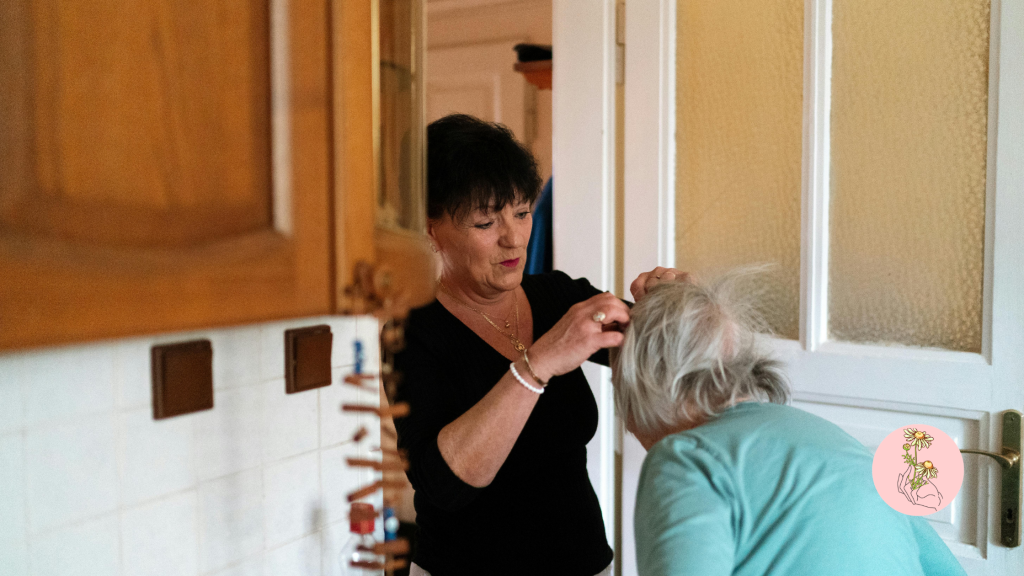
Can the VA Pay a Family Member to Care for a Veteran?
Certain VA programs may provide a pathway for eligible family caregivers to receive compensation.
Two programs are especially important to ask about:
1. Veteran-Directed Care
Veteran-Directed Care, or VDC, allows eligible Veterans to have more control over certain home and community-based services.
Instead of an agency automatically selecting the worker, an eligible Veteran or representative receives assistance managing a service budget and hiring workers.
Under this program, a worker may potentially be a family member or neighbor.
This can make Veteran-Directed Care especially relevant for families where a spouse, adult child or another relative is already providing substantial hands-on support.
However, VDC must be clinically appropriate and available in the Veteran’s location.
2. Program of Comprehensive Assistance for Family Caregivers
The Program of Comprehensive Assistance for Family Caregivers, commonly called PCAFC, is another option.
PCAFC has its own eligibility requirements.
When a Veteran and caregiver qualify, an approved Primary Family Caregiver may receive a monthly stipend along with other potential caregiver supports and benefits.
This is different from being hired by a traditional home-care agency and paid an hourly caregiver wage.
Is VA Homemaker/Home Health Aide the Same as Getting Paid as a Family Caregiver?
No.
This distinction is extremely important.
The VA Homemaker and Home Health Aide program can provide eligible Veterans with help at home through qualifying organizations that provide VA-authorized services.
Home health aides can assist Veterans with personal-care activities such as:
- Bathing
- Dressing
- Grooming
- Eating
- Toileting
- Mobility and transfers
- Other authorized daily-care needs
But families should not automatically assume that choosing Homemaker/Home Health Aide Care means the Veteran’s daughter, son, spouse or other relative will personally be paid by VA.
If your primary goal is to determine whether you can receive payment for care you are already providing, specifically ask the VA about Veteran-Directed Care and PCAFC in addition to discussing Homemaker/Home Health Aide services.
Can I Get Paid to Take Care of My Veteran Father?
Potentially.
Adult children caring for Veteran parents are often already doing significant unpaid work before they discover that VA caregiver and home-care programs exist.
Maybe you are:
- Helping your father shower
- Preparing all of his meals
- Helping him dress
- Assisting him into and out of bed
- Driving him to appointments
- Providing supervision because of memory problems
- Helping him use the bathroom
- Staying nearby because you are concerned about falls
- Reducing your employment hours because he cannot safely remain alone
If this sounds familiar, tell the Veteran’s VA care team or social worker exactly what you are providing.
Do not simply say:
“I take care of my dad.”
Explain the hands-on care you provide and how frequently he needs it.
Then ask:
“Are Veteran-Directed Care or the Program of Comprehensive Assistance for Family Caregivers available or appropriate for his situation?”
That is a much more precise question.
Can a Spouse Get Paid to Care for a Veteran?
A spouse may potentially qualify under applicable VA caregiver programs, depending on the Veteran’s situation and the specific program requirements.
PCAFC permits qualifying family caregivers to include spouses as well as certain other family members.
Veteran-Directed Care may also allow qualifying Veterans to hire certain family members as workers when the program is available and applicable requirements are met.
Being married to a Veteran, however, does not automatically create eligibility for caregiver payments.
The Veteran and caregiver must meet the requirements of the applicable program.
What Are the PCAFC Requirements?
PCAFC has considerably more specific requirements than simply being a Veteran’s caregiver.
Among other criteria, VA currently requires the Veteran to have an individual or combined VA service-connected disability rating of at least 70%.
The Veteran must also need in-person personal-care services for at least 6 continuous months because of qualifying needs such as:
- An inability to perform an activity of daily living
- A need for supervision or protection related to an impairment or injury
- A need for regular or extensive instruction or supervision
Other program requirements also apply.
The caregiver must meet VA’s eligibility requirements as well.
This is why a family should not assume that providing substantial care automatically means they will receive the PCAFC stipend.
What Is the VA Family Caregiver Stipend?
When a caregiver is approved as the Primary Family Caregiver through PCAFC, the caregiver may qualify for a monthly financial stipend.
The stipend is not simply based on whatever hourly rate the family believes the caregiver should receive.
VA uses its own stipend methodology, and the amount can depend on the Veteran’s assessed personal-care needs and applicable stipend level.
Families should therefore avoid websites or social-media posts that promise a particular payment amount without reviewing the Veteran’s individual circumstances.
What If the Veteran Doesn’t Qualify for PCAFC?
That does not necessarily mean there are no home-care options.
VA provides multiple home and community-based programs.
Depending on clinical eligibility, availability and the Veteran’s circumstances, options may include:
- Veteran-Directed Care
- Homemaker and Home Health Aide Care
- Respite Care
- Adult Day Health Care
- Home Based Primary Care
- Other applicable home and community-based services
A Veteran may also be eligible for caregiver support even when the family caregiver does not qualify for the PCAFC monthly stipend.
The right question becomes:
“Which VA home-care or caregiver program fits our situation?”
What Is Veteran-Directed Care?
Veteran-Directed Care is particularly important for families searching online for:
“How can I get paid to care for my Veteran parent?”
Under VDC, an eligible Veteran receives a budget for approved services.
With support, the Veteran or representative can develop a spending plan and hire workers who help the Veteran remain safely at home.
VA specifically indicates that these workers might include the Veteran’s own family member or neighbor.
Veteran-Directed Care can therefore be fundamentally different from traditional agency-directed home care.
However, VDC availability varies by location, and qualifying for VA health care alone does not guarantee that the program is available or clinically appropriate for every Veteran.
Ask the Veteran’s VA social worker specifically whether Veteran-Directed Care is available for the Veteran in Gwinnett County.
What If We Prefer Traditional VA Home Care Instead?
Not every family wants the family member to become the paid caregiver.
Some relatives are exhausted.
Others want to remain a daughter, son or spouse instead of becoming the Veteran’s primary paid care worker.
In that situation, VA Homemaker and Home Health Aide Care may be worth discussing.
The program helps eligible Veterans receive personal-care assistance through qualifying organizations.
For families already experiencing caregiver burden, bringing in an outside caregiver may provide important support while helping the Veteran remain at home.
How Do I Start the Process in Gwinnett County?
Start with the Veteran’s VA health care team or VA social worker.
Explain:
- What assistance the Veteran needs.
- What care you currently provide.
- Whether the Veteran can safely remain alone.
- Whether providing care is affecting your employment or family responsibilities.
- Whether you want to continue providing the care yourself or would prefer outside caregiver assistance.
Then ask specifically about the appropriate programs.
You might say:
“I am currently providing my father’s daily personal care in Gwinnett County. We want to understand whether Veteran-Directed Care, PCAFC, or VA Homemaker/Home Health Aide services may apply to our situation.”
That gives the VA care team a much clearer picture of what your family is trying to accomplish.
Can I Just Call a VA Home Care Agency and Start Getting Paid?
Do not assume so.
If you are seeking payment specifically as a family caregiver, your pathway may be different from a Veteran receiving traditional agency-provided Homemaker/Home Health Aide services.
Likewise, families should not begin services with an agency and assume VA will later reimburse them.
VA-authorized community care generally requires the appropriate VA referral or authorization.
VA Community Care in Georgia
Georgia is part of VA Community Care Network Region 3, administered by Optum.
The Community Care Network connects VA with community providers that deliver authorized care to eligible Veterans.
If the Veteran receives an authorization for traditional VA community home-care services, an applicable network provider may be involved in delivering that care.
Again, this is different from assuming that CCN automatically pays a relative for being the Veteran’s family caregiver.
Already Caring for a Veteran in Gwinnett County?
Many family caregivers wait until they are exhausted before asking what resources are available.
You do not need to wait until the Veteran experiences a major fall, hospitalization or placement crisis before asking about VA home-care options.
If you are already providing significant daily support to a Veteran in Lawrenceville, Snellville, Duluth, Norcross, Lilburn, Suwanee, Buford or elsewhere in Gwinnett County, start documenting the care you provide.
Write down:
- What you help with
- How often assistance is needed
- What the Veteran cannot safely do independently
- Whether supervision is necessary
- How long these needs have existed
- How caregiving affects your work and daily life
Bring that information into your conversation with the Veteran’s VA care team.
Looking for VA Home Care in Gwinnett County, Georgia?
Serenity Care & Compassion helps Veterans and their families understand the next steps for VA-authorized home care in Georgia.
If your primary goal is to find out whether you can be paid as your Veteran family member’s caregiver, speak with the VA about Veteran-Directed Care and PCAFC and determine which programs are available and appropriate for your loved one.
If the Veteran instead has—or is pursuing—an authorization for VA Homemaker/Home Health Aide services through community care, Serenity Care & Compassion can discuss the Veteran’s home-care needs and help your family understand the next steps for starting authorized agency-provided care when applicable.
Caring for a Veteran in Gwinnett County? Contact Serenity Care & Compassion today to discuss your family’s home-care needs and VA care options.
Eligibility for PCAFC, Veteran-Directed Care, Homemaker/Home Health Aide Care, VA Community Care, caregiver stipends, service budgets, referrals and authorized services is determined by the Department of Veterans Affairs and applicable program requirements. Veteran-Directed Care availability varies by location. Contacting Serenity Care & Compassion does not guarantee eligibility, caregiver payment, VA authorization or a specific benefit amount.
FAQ
Can I get paid to take care of my Veteran parent in Georgia?
Potentially. Depending on the Veteran’s eligibility and local program availability, programs such as Veteran-Directed Care may allow an eligible Veteran to hire a family member, while PCAFC may provide an approved Primary Family Caregiver with a monthly stipend.
Can a daughter get paid to take care of her Veteran father?
Potentially, depending on the applicable VA program and eligibility requirements. Families should ask the Veteran’s VA social worker about Veteran-Directed Care and PCAFC.
Can a spouse get paid to care for a Veteran?
Certain spouses may qualify through applicable VA caregiver programs when both the Veteran and caregiver meet program requirements.
Does VA Homemaker/Home Health Aide pay family caregivers?
VA Homemaker/Home Health Aide Care generally involves aides working through organizations that have arrangements with VA. Families specifically seeking compensation for a relative should also ask about Veteran-Directed Care and PCAFC.
What is Veteran-Directed Care?
Veteran-Directed Care is a VA home and community-based program that gives eligible Veterans greater control over a service budget and may allow them to hire workers, potentially including a family member or neighbor.
What is the VA family caregiver stipend?
Eligible Primary Family Caregivers approved through PCAFC may receive a monthly stipend. PCAFC has specific eligibility requirements for both the Veteran and caregiver.
Does the Veteran need a 70% disability rating for PCAFC?
VA currently requires the Veteran to have an individual or combined service-connected disability rating of at least 70%, along with other eligibility requirements.
Is Veteran-Directed Care available in Gwinnett County, Georgia?
Veteran-Directed Care availability varies by location. Families should ask the Veteran’s VA social worker whether the program is currently available for the Veteran’s location and circumstances.
Can Serenity Care & Compassion help with VA home care in Gwinnett County?
Families seeking agency-provided VA-authorized home care can contact Serenity Care & Compassion to discuss the Veteran’s needs and next steps. VA determines eligibility, referrals and authorization.